








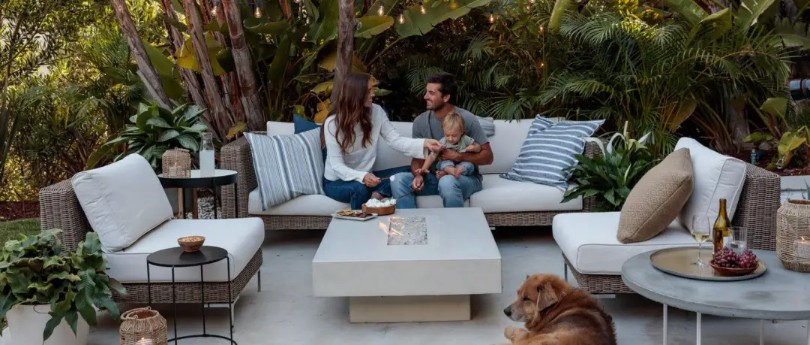
Under the sunny skies of Los Angeles, a young Chinese man with black-rimmed glasses squats in his backyard, adjusting the embedded handle of a waterproof sofa cover. On a tiny screw, the word "OUTER" can be faintly seen — the name of the outdoor furniture brand he built from scratch.
This entrepreneur, who seamlessly bridged China's supply chain with the backyard culture of American households, is Jiake Liu. Over eight years, he transformed from a boy in a small town in Zhejiang to a "backyard revolutionary" among America's middle class.
Born in Zhejiang, Liu immigrated to the U.S. with his parents at 13. This trans-Pacific childhood journey laid the foundation for his future role as a connector between Eastern and Western business cultures.
While studying computer engineering at the University of Southern California, he invented a "glove-style keyboard," already hinting at his innate engineering talent.
After graduation, Liu joined Riot Games, the company behind League of Legends. As the game became a global sensation, particularly in China, he witnessed the explosive power of cultural products crossing borders. During a collaborative project with Tencent, he honed a sharp sense of user needs.
His turning point came in 2016.
By then, Liu had already launched several SaaS and cross-border e-commerce startups in Silicon Valley. One day, a cousin in Zhejiang invited him to help develop e-commerce channels for the family's furniture factory.
What seemed like a casual favor revealed an unexpected business opportunity: in the U.S., outdoor sofas had an average annual wear-and-tear rate of 30%, with no effective solutions available.
Even more surprising was the discovery that American households were spending around 200 hours a year maintaining backyard furniture, equivalent to forfeiting five full weeks of paid vacation.
0.75x(1)_1744791228995.jpg)
1. Opportunity Hidden in Inconvenience
One early morning, at a casual backyard gathering, Liu sat down only to have his pants soaked by dew on a patio cushion. A friend joked, "That's the price of outdoor living."
But Liu didn't laugh — he was struck.
His research uncovered glaring flaws in the U.S. outdoor sofa market: waterproofing was crude, cleaning was labor-intensive, and designs were monotonous.
Even worse, there was a total disconnect between supply and demand: Chinese factories focused solely on production, oblivious to end-user needs, while American brands stagnated, heavily reliant on outsourcing.
In 2018, Liu founded Outer in California, targeting the premium outdoor furniture market.
He teamed up with Terry Lin, a former designer at high-end furniture brand Pottery Barn. The two instantly clicked. "We're not just making furniture," they agreed. "We're building problem-solving tools."
They spent 14 months developing their first sofa: featuring proprietary waterproof fabric (OuterShell), modular assembly, eco-friendly recyclable materials — even the screws were engraved with the brand's logo.
Priced at $5,000, this meticulously crafted sofa adopted a "hero product" strategy — and it worked. Within 11 months of launch, monthly sales surpassed $2 million, with a repeat purchase rate of 10%.
But product success was only the beginning. Liu wanted to challenge the cold, transactional nature of the traditional furniture industry.
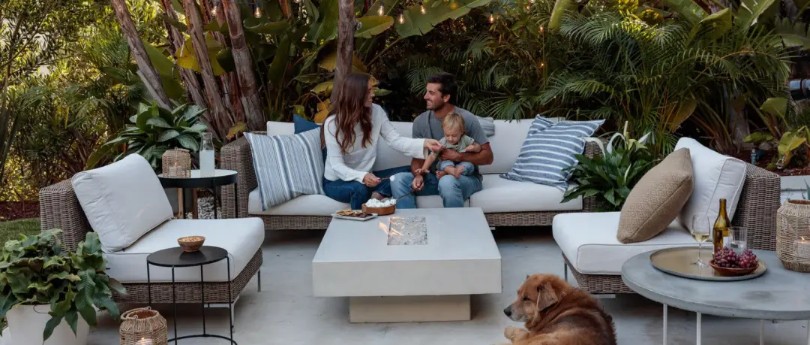
He launched the Outer Neighborhood Showroom program, inviting customers to turn their own backyards into mini showrooms. In return, they received rewards for hosting prospective buyers.
From just 20 homes to over 1,000 locations across the U.S., this decentralized, community-driven marketing model quickly gained traction among affluent circles. "It's not a transaction," said one California homeowner. "It's a shared lifestyle."
Source: Outer
Liu's obsession with detail was equally remarkable.
He once personally visited a factory in China to teach workers how to weave rattan chairs — because "even a 1mm difference in curve alignment affects comfort." When developing mosquito-repellent blankets, he collaborated with military suppliers to infuse fabrics with camouflage-grade materials. Eventually, even Kim Kardashian became a loyal fan.
This fusion of "engineer precision and designer aesthetics" made Outer products both functional tools and artistic creations.
2. From Chaos to Craft: A Supply Chain Reinvented
In 2021, Outer hit its darkest hour. Rapid growth had masked deep supply chain issues: ocean freight costs soared, inventory piled up, and unsold stock caused a severe cash crunch.
"We nearly went under," Liu recalled. "Half our funding was stuck in warehouses."
Determined to course-correct, he brought in a seasoned supply chain expert from Decathlon, restructured the team, renegotiated payment terms, and admitted, "I was great at building products — but had failed the basics."
This crisis sparked a transformation. Outer shifted from rapid expansion to refined operations. Over 30 new SKUs were launched, including firepit tables and hydraulic loungers, offering a full suite of backyard solutions.
Liu's philosophy also grew clearer: "Premium doesn't mean expensive — it means solving real problems with every dollar spent."
For example, their outdoor umbrella borrowed design elements from sailboat masts. The heavy concrete base was replaced with a plastic-steel hybrid — both stylish and lightweight.
In October 2023, aboard a bumpy flight from Shanghai to Shenzhen, Liu scribbled down the "Outer Space" plan — an initiative to help American middle-class families build backyard structures.
The idea came from his own experience building a backyard kitchen during the pandemic: "It took four months for permits, and labor costs were 70% — it was like the Stone Age!"
His prefab modular structures, blending Nordic design with Chinese manufacturing, allow users to build a sauna, gym, or sunroom in just 8 hours. Cost: from $100,000 down to $20,000.
By Liu's calculations, U.S. backyard space totals over 16 million acres. Traditional construction methods reach only 2% of homeowners. Outer Space could reach 30% of middle-class families.
By 2024, the product will enter testing, with patent filings underway. "He's not just selling furniture," said one investor. "He's redefining outdoor living."
Source: Outer
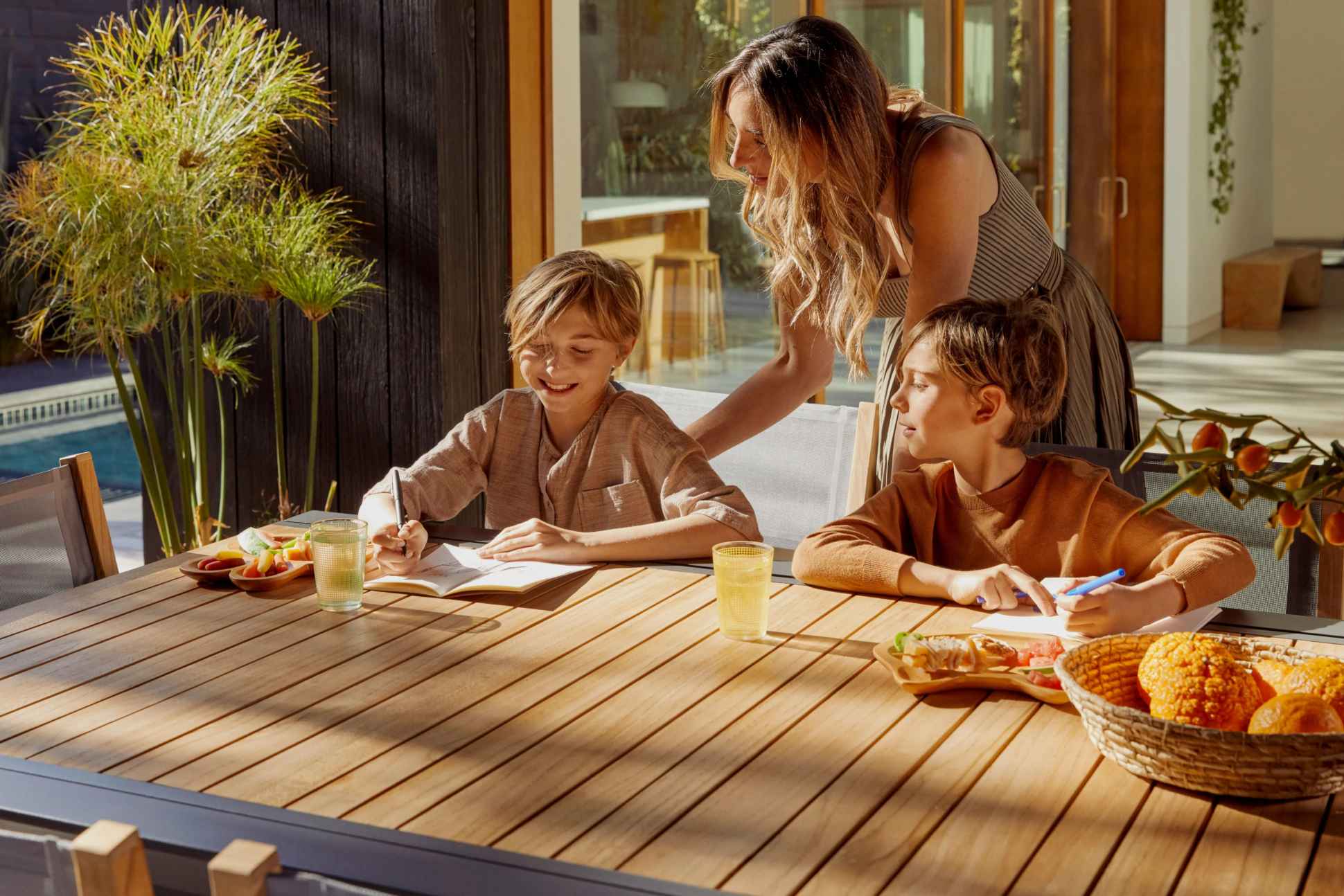
Today, Outer has evolved from a single-product brand into a comprehensive outdoor living solutions provider.
Liu often tells his team, "We're not competing with furniture makers. We're competing with Netflix and Disney — if we can keep people outdoors one more hour, we win."
Looking back, what's most inspiring isn't the tenfold valuation growth — it's the unwavering persistence of an immigrant entrepreneur: using the wisdom of Eastern supply chains to solve Western lifestyle challenges; using the warmth of technology to reconnect people with nature.
As Liu once said in a speech:
"True globalization isn't just about selling Chinese goods to America — it's about people from different cultures recognizing each other through a better life."
On his bookshelf still sits the prototype of his glove-style keyboard — a reminder that innovation begins with frustration over inconvenience, and thrives on a devotion to detail.
In his California home, the Outer Space model stands quietly in the yard. Morning sunlight filters through self-cleaning glass onto dew-proof sofas — quietly telling a story of crossing cultures, creative collision, and rebirth.