









In 2019, Chinese footballer Wu Lei joined La Liga’s RCD Espanyol, making history as part of the Spanish club.
As he sprinted across the pitch in the club’s jersey, few realized that this Iberian sportswear brand had already undergone a genetic transformation—its roots deeply embedded in Jinjiang, Fujian.
The story begins in 1998, inside a humble workshop.
A Small Workshop’s Brand Dream
Jinjiang in 1998 was a land infused with the salty sea breeze and the restless ambition of entrepreneurs. Even the air seemed filled with opportunities, compelling Ke Yongyuan to plunge into the entrepreneurial tide.
It was an era of unrestrained growth. Ke still remembers how, with just a few sewing machines and a small team, a family workshop could secure outsourced export orders from large factories. The machines roared day and night, churning out endless orders that nurtured the blossoming workshops like rain.
Amid the melodies of the Minnan song Love to Struggle, Love to Win, this once-impoverished county was undergoing a miraculous transformation. Its proximity to Taiwan, overseas Chinese resources, and an abundant supply of low-cost labor made Jinjiang the perfect recipient of the global industrial shift—a golden apple falling into its hands.
With calloused hands, grassroots entrepreneurs turned this barren land—where even crops struggled to grow—into one of China's top ten economic powerhouses.
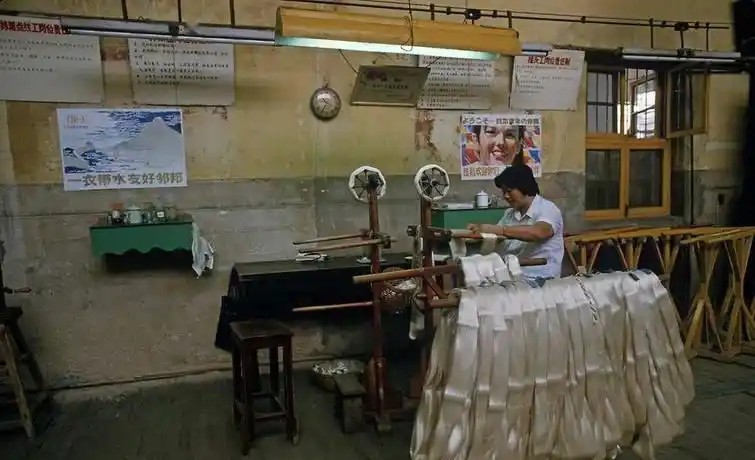
Small family workshops in Jinjiang at the end of the 20th century/Source: Internet
In 2002, the introduction of the "Jinjiang Experience" became a beacon of guidance.
Inspired by this, Ke Yongyuan founded Aoque Apparel, with a name carrying a family legacy—“Ao” symbolizing Olympic ambition and “Que” derived from the family’s ancestral motto, Ruique Chuanfang (Auspicious Magpies Passing Down Fortune). In an era when brand awareness was still emerging, entrepreneurs gravitated towards names like "Ke" and "Ao," hoping to bask in the glow of international brands.
Ke spent his days supervising production and his nights curled up beside sewing machines for rest. Meanwhile, his younger brother Ke Yongxiang, fresh out of school in 2005, expanded their business in Fuzhou, turning two specialty stores into a profit powerhouse, generating 2 million yuan in just three years.
However, Aoque never managed to spread its wings.
While their Jinjiang counterparts were spending millions to secure prime advertising slots on CCTV, the Ke brothers came to a sobering realization—a family workshop lacked the foundation to support a brand dream.
In 2010, they pivoted to Yuanxiang Weaving, shifting focus to OEM manufacturing for international brands. This strategic retreat became their rebirth—within four years, the workforce grew from a few dozen to over a thousand, and their production extended to more than 20 global brands, including Umbro and Kappa, with annual revenues surpassing 200 million yuan.
Yet behind their thriving OEM business, Ke Yongxiang remained fixated on the glaring disparity in pricing—a jersey they produced for $6 would be sold for $70 under a global brand.
"We were both tailors and apprentices," he recalled. Determined to crack the commercial code of football culture, he led his team in studying international brands’ R&D systems, transforming their factory into a precision-driven manufacturing academy.
But in the depths of the night, that dormant dream of creating their own brand never stopped knocking. The allure of the smiling curve in manufacturing—where the real value lay at both ends—remained an unreachable beacon.
_1743851738726.jpg)
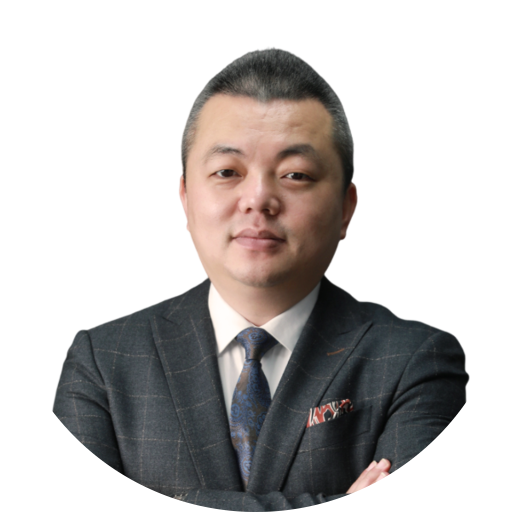
Ke Yongyuan, Chairman of Yuanxiang Investment Co., Ltd./Photo source: Strait News
Breaking the OEM Dilemma: A $300 Million Gamble
By 2014, Jinjiang’s sports industry was a tale of two extremes.
While Anta and Xtep aggressively expanded their brands, OEM manufacturers like Yuanxiang Weaving were struggling with shrinking international orders.
The turning point came in the form of an overdue payment—one that presented Ke Yongxiang with a rare opportunity.
In 2014, Spanish sportswear brand Kelme, once the jersey supplier for Real Madrid, defaulted on its payment to Yuanxiang. At the time, Kelme was in decline in Europe due to a narrow product range and the aftermath of the 2008 financial crisis. In China, it was nearly invisible—a brand some considered a dying camel.
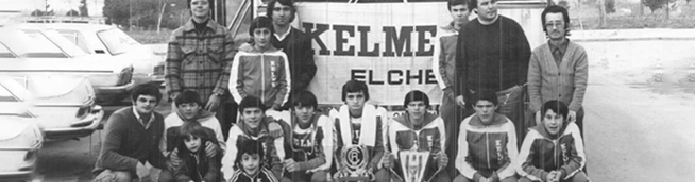
Early Kelmei/Source: Kelmei
Sensing a financial crisis on Kelme’s end, the Ke brothers made their move.
Still an OEM manufacturer at the time, they proposed acquiring Kelme’s China operations.
"Building our own brand from scratch would be costly and risky. Acquiring a globally recognized brand and standing on the shoulders of giants seemed like a shortcut," Ke recalled.
They didn’t have deep pockets, but true to the Minnan spirit of Love to Struggle, Love to Win, they bet on the opportunity, even if it meant borrowing money.
Eventually, Yuanxiang acquired Kelme’s China rights for just 20 million yuan—a fraction of its real value.
However, their timing seemed off. The sportswear industry was grappling with oversupply, cutthroat competition, and growing dominance from global giants like Nike and Adidas, who were aggressively expanding into China’s lower-tier cities.
"Securing Kelme’s China rights wasn’t the finish line, but the starting point," Ke strategized. Their OEM supply chain would now support their brand operation, and instead of competing head-on with Nike and Adidas, they adopted a “rural encirclement strategy”, focusing on China’s lower leagues and grassroots football.
In 2014 alone, they sponsored 8 China League One teams, believing that China’s massive football fanbase and market potential would eventually pay off.
Given the national team’s historically poor performance, this was a bold gamble.
But the unconventional strategy delivered unexpected results.
In 2015, China’s Football Reform Plan was announced, emphasizing campus football expansion and grassroots football development.
Riding this wave, Kelme’s brand awareness skyrocketed.
Encouraged by early success, they expanded sponsorships to the Chinese Women's Super League, China League Two, and national futsal competitions, embedding themselves across all levels of Chinese football.
By 2018, Kelme’s revenue reached 800 million yuan, starkly contrasting its stagnation in Europe.
That year, Ke Yongxiang injected $300 million to acquire Kelme’s global headquarters, bringing the 60-year-old brand fully under Chinese ownership.
Spain finally realized that Chinese capital was rewriting the script of European football’s commercial landscape.
The Double-Helix Transformation: From Sponsor to Rule Maker
Acquiring Kelme was never just about money.
By relocating Kelme’s global HQ to Jinjiang, the Ke brothers initiated a genetic fusion—retaining Spain’s deep football culture while leveraging China’s agile supply chain.
They later used the same strategy to sponsor La Liga, the Premier League, Bundesliga, and Ligue 1, bringing Kelme’s lynx paw logo back to European fields.
In 2019, Wu Lei’s first La Liga goal sparked a Kelme jersey sales boom, with thousands of units selling out across Spain.
By 2023, Kelme had reached a new milestone—producing the official match ball for the AFC Asian Cup, delivered from Jinjiang to Doha in just 72 hours.
_1743851846686.jpg)
KELME football becomes the official match ball for the 2023 AFC Qatar Asian Cup/Source: KELME
And in 2024, a five-year renewal with the AFC expanded their role beyond equipment supply to women’s football, youth training, and grassroots programs, solidifying Kelme as a stakeholder in Asian football’s ecosystem.
Today, Kelme dominates 70% of China’s mid-tier sportswear market, while its global revenue is projected to hit 10 billion yuan in five years, with half coming from overseas markets.
Digitalization: The Second Growth Curve
Ke Yongxiang was delighted to see Kelme jerseys appear at the Guizhou Village Super League.
From remote mountain villages in Guizhou to the lush green fields of the AFC Champions League and UEFA Champions League, Kelme’s signature “wildcat claw” continues to expand its territory—powered by the enduring momentum of “Made in Jinjiang.”
“Only by improving quality can we build a stronger brand and win a larger market.” The Jinjiang sportswear industry has learned this lesson the hard way—one that Ke Yongxiang remembers vividly. “There was a time when some brands ran high-profile TV commercials, but poor product quality ended up hurting their reputation instead.”
Today, Kelme boasts a complete industrial chain—from yarn production, dyeing, weaving, design, and R&D, to apparel manufacturing, warehousing, and sales. “Outsiders only see Kelme’s comeback in recent years, but they don’t see the twenty years of hard work we’ve put into strengthening our foundation,” Ke said.
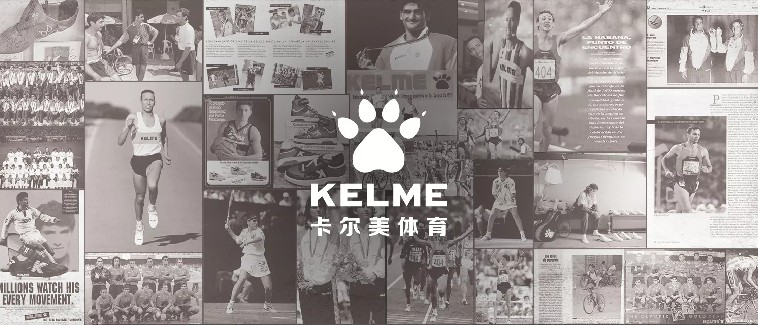
Kelme today/Source: Kelme
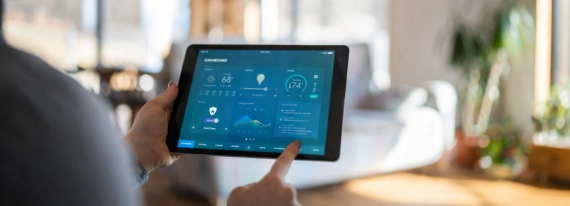
Kelme began its digital transformation in 2019. “In the past, sourcing materials meant running around the workshop with stacks of spreadsheets,” said Huang Qingfeng, Kelme’s Production Director. “Now, with our 5G smart factory, data flows have replaced shouting. With just a tap on the screen, the entire production process is visible in real time.”
“Each step in the workflow can now ‘speak’ for itself—the entire process is transparent, and any issues can be detected and flagged in advance.”
In the smart workshop at Kelme’s Football Industry Park in Jinjiang, an overhead system transports jerseys at a pace of three pieces per minute. Global order data is displayed in real time on a large cloud-based screen. Behind this multi-billion-yuan “intelligent supply chain integration” project lies Kelme’s secret weapon against global giants: using Huawei’s industrial internet platform, the production cycle for custom jerseys has been cut from 30 days to just 7, with defect rates reduced to only 0.2%.
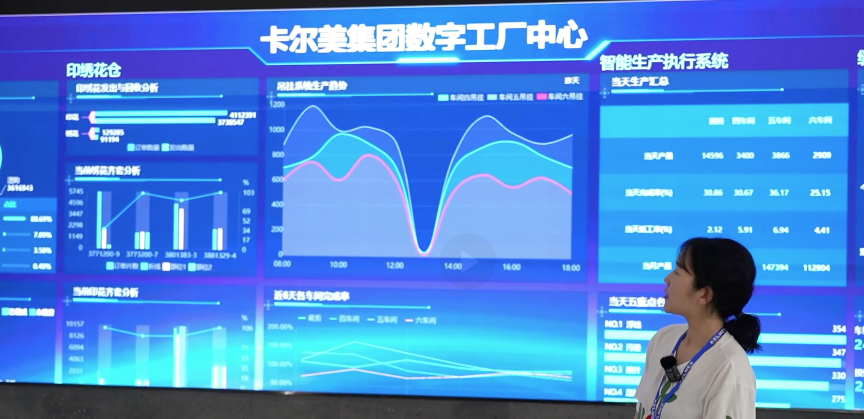
Kelme’s digital dashboard/Source: Straits Communication
Kelme’s digital transformation goes far beyond production. While other brands were still relying on livestream selling, Kelme built an integrated network combining event IPs and digital marketing:
-
VR viewing systems for La Liga matches include synchronized links to Kelme gear.
-
A youth football training app features a built-in gear store.
-
Blockchain technology is used to assign digital certificates to limited-edition jerseys.
This fusion of “hard tech + soft culture” has revitalized the 60-year-old brand for the Gen Z market.
Looking back from the threshold of 2025, Kelme’s decade-long transformation reflects the broader upgrade of Chinese manufacturing: from OEM to brand ownership, from acquisition to innovation, from product exports to standard-setting.
In just ten years, brothers Ke Yongyuan and Ke Yongxiang transformed Kelme from a fallen aristocrat of European football into a dominant force in AFC tournaments. This is not only a powerful case study of a Jinjiang private enterprise’s comeback, but also a telling symbol of China’s move toward global brand leadership.
From a small factory in southern Fujian to an official partner of the Asian Football Confederation, Kelme’s ten-year journey reads like a high-stakes brand breakout. In an era full of uncertainty, the key lesson may be this: globalization is never just a swap of capital—it’s the fusion and innovation of cultural DNA.
As Jinjiang’s digital workshops integrate deeply with Elche’s football heritage, and Chinese efficiency breathes new life into the innovation engines of old Europe, Kelme is shaping a new model for cross-border acquisitions. This is not the end—but the beginning of a new chapter for Chinese brands going global.