








_1745396410412.jpg)
In 2010, inside a factory workshop in Shenzhen’s Bao’an District, Lei Guibin stood silently, staring at mountains of unsold laptop batteries.
As the owner of a contract manufacturing plant, he had just received a “Top Supplier of the Decade” award from an international brand. Yet instead of pride, he felt a growing sense of unease.
He had sensed the looming crisis—global laptop shipments were on the decline, and the rise of tablets and smartphones was reshaping the consumer electronics landscape.
The turning point came in 2011 when Apple released the iPhone 4s, ushering in the era of non-removable batteries.
“We had become a world leader in contract manufacturing, but the race track itself was vanishing,” Lei recalled.
There was no greater frustration than excelling in a game that was about to disappear.
As a businessman from Chaoshan, Lei had already been contemplating a transformation. He saw the opportunity behind the shift—portable power banks would soon become essential for smartphone users.
After three months of market research, Lei identified a critical paradox: the widespread adoption of smartphones had created strong demand for mobile charging, yet the market was flooded with counterfeit products featuring inflated capacity claims and serious safety risks. At that time, Anker had yet to rise, and Xiaomi hadn’t entered the accessories market.
Lei realized this could be the last chance for contract manufacturers to build their brands.
In 2012, he officially registered ROMOSS in Shenzhen. The brand’s European-sounding name hinted at Lei’s ambition: “Rome wasn’t built in a day—but we aim to build an empire in charging technology.”
Channels: Regaining Control
Determined to make a clean break from the OEM path, Lei redirected his team’s battery expertise into developing power banks.
But the domestic market was dominated by knockoffs, and consumer awareness remained limited—many simply believed, “as long as it works, it’s fine.” Lei took what seemed like a risky path: abandoning the OEM model, focusing entirely on building a private brand, and going all-in on online channels.
In its early days, the team invested all available funds into its first flagship product: the SENSE 4 power bank, with a real 10,000mAh capacity, aluminum alloy casing, and a “three-input, four-output” port design—a direct challenge to industry norms.
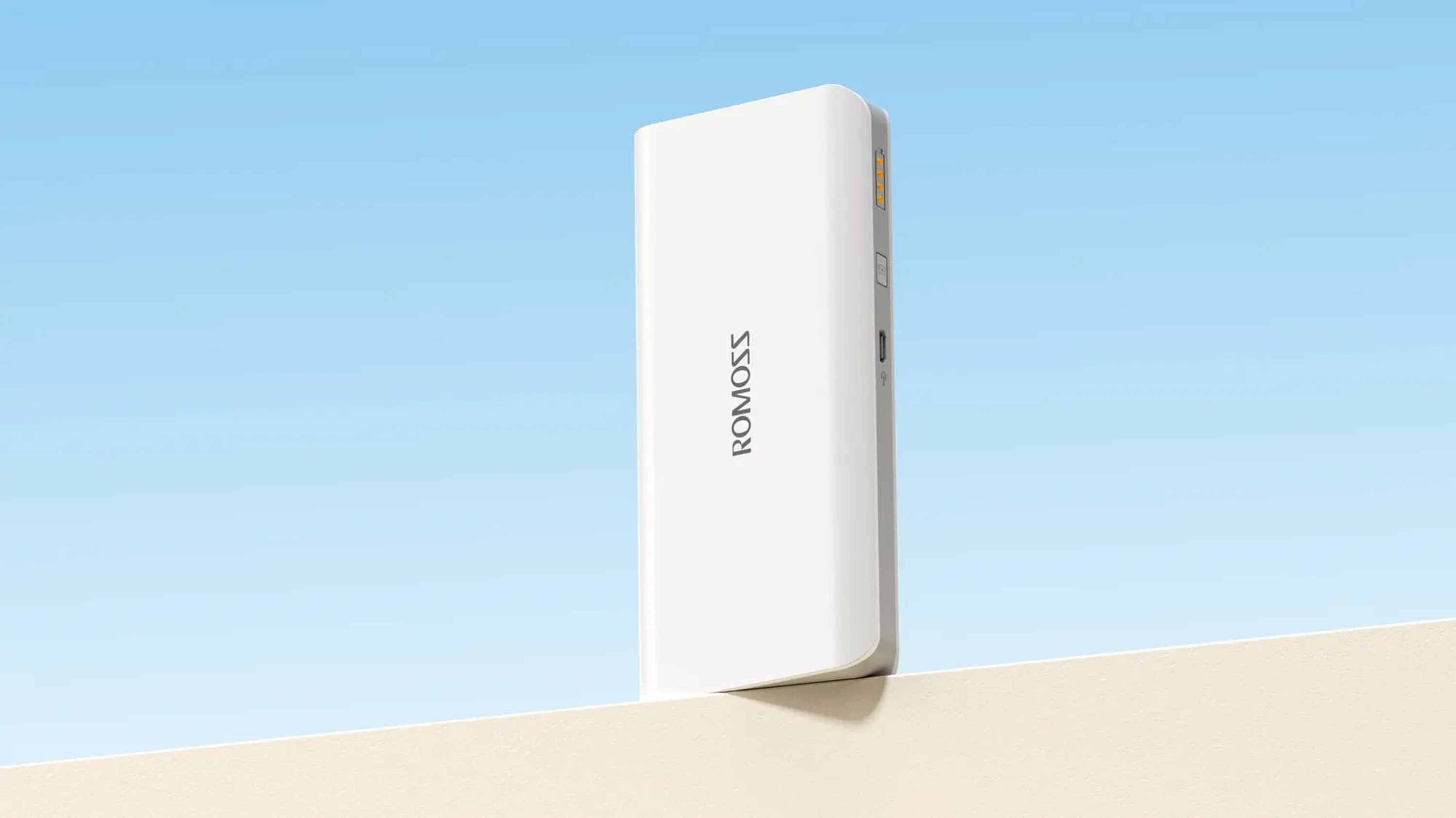
ROMOSS SENSE 4/Source: ROMOSS
To convince suppliers to support innovation, Lei mortgaged his home to place an audacious order of 500,000 units—far exceeding the annual sales of leading brands at the time.
With this inventory in hand, Lei launched a “single-point breakthrough” strategy: skip offline channels, focus resources on Tmall, believing online retail was the only way to quickly reach a global audience.
In March 2013, ROMOSS launched on Tmall. Within just eight months, it had risen to the top of its category—a remarkable feat for a new brand and a clear sign of a channel revolution.
_1745397034911.jpg)
Various awards received by ROMOSS/Source: ROMOSS
“We’ve experienced the pain of volatile OEM orders,” Lei once said. “We had to regain control of the channel.”
During the 2014 Singles’ Day shopping festival, while competitors raced to the bottom with discounts, ROMOSS did the opposite—launching a “Free Charging for a Year” campaign: customers who purchased select models would receive free access to shared power banks for 12 months.
The idea came from Lei’s trip to Hangzhou, where he saw shared bicycles on the streets and envisioned a hardware-plus-service model.
That day, ROMOSS hit RMB 30 million in sales and gathered over 120,000 user data entries, which would inform future product iterations.
Supply Chain: Owning the Core Technologies
In 2016, one early morning, production at the Jiangmen factory came to a halt. The pass rate for a specific battery cell had plummeted from 99% to 70%. Lei and his engineers drove 200 kilometers overnight to investigate, discovering a 0.3% error in the electrolyte formula.
This crisis exposed a major weakness of the OEM mindset: reliance on third-party components meant the brand had little real control.
In response, ROMOSS launched a three-year vertical integration strategy:
-
Partnered with the Chinese Academy of Sciences to establish an energy storage lab, raising R&D investment from 3% to 8%.
-
Built a 350,000 sqm clean energy industrial park in Jiangmen, introducing German KUKA robots to automate 80% of production.
-
Created a “Material Bank” model, where suppliers pre-stocked raw materials in ROMOSS warehouses and were paid on demand, cutting lead times from 15 days to just 3 hours.
Though this asset-heavy model drew skepticism from investors, the 2023 European energy crisis proved its worth—while peers cut production due to battery shortages, ROMOSS, with its in-house capacity, secured large redirected orders and increased its overseas market share to 27%.
In 2019, the ROMOSS team in Germany faced a major challenge: failing GS certification after repeated product drops from 1.8 meters. The industry standard was just 5 drops—GS required 26.
After 47 days and 23 design revisions, engineers developed a “suspension shock-absorbing structure” using silicone layers in the internal casing to dissipate impact force. The resulting patent led to a line of drop-resistant products that captured 61% of the outdoor sports market in Europe and the US.
But overcoming technical barriers was easier than bridging cultural ones.
In 2022, during Ramadan, ROMOSS’s Middle East team launched a golden-embossed gift set—but it failed in Saudi Arabia. Research showed that while gold signifies prestige, the intricate patterns clashed with modern aesthetic tastes.
The team quickly redesigned the product, maintaining the gold tone but replacing ornate motifs with geometric cutouts. They partnered with influencers in Dubai to launch a “Power to Others” campaign—users who shared videos of themselves charging others' devices could win a pilgrimage trip to Mecca.
Within two weeks, sales soared by 180%, sparking a new trend of “charging-based social interaction.”
_1745397010164.jpg)
ROMOSS product series/Source: ROMOSS
Betting on New Energy, Betting on the Future
In 2024, Lei made a controversial decision: investing RMB 230 million to build an off-grid charging lab in the Sahara Desert.
The board questioned the move—wasn’t it too radical for a power bank company to venture into solar storage?
But the numbers showed promise: the home energy storage line was already contributing 18% of total revenue, with a profit margin 2.3 times higher than traditional electronics.
In Algeria’s 50°C heat, engineers developed a biomimetic heat dissipation membrane, extending device lifespan threefold in sandstorm conditions. The tech was later adopted in off-grid power systems for medical devices in Africa, unlocking an unexpected B2B market.
The 11-year journey of ROMOSS reflects the broader story of China’s manufacturing transformation:
-
From OEM to industry standard-setter: its three-input, four-output design became a global benchmark, pushing China’s charging protocols two years ahead of the world.
-
From price war to value creation: With 217 GS certifications, ROMOSS products sell at a 30% premium in Europe and the US.
-
From product exports to model exports: ROMOSS now packages its "Material Bank" and "Certification Task Force" models as turnkey solutions for small manufacturers in Dongguan.
As of 2025, the same banner still hangs in Lei’s office, a remnant from the early transformation days in 2012:
“Be the First to Do It, or Be the First to Do It Right.”
For this 52-year-old entrepreneur, the charging revolution has only just begun.
_1751507038923.png)