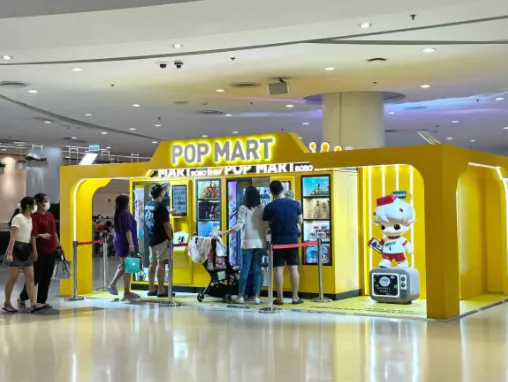












At Westfield Shopping Centre in London, crowds were pushing and shouting, while security guards struggled to separate customers who were fighting each other.
At first glance - has capitalism undergone another revolution?
No, they're just competing for Labubu.
At the same time, the streets of Los Angeles were winding with a thousand meter long queue at 3am, Tokyo's Ginza was forced to implement emergency flow restrictions, and toy stores in Ho Chi Minh City, Vietnam sold all Labubu at a premium of 100-500 yuan.
This Nordic elf image created by Hong Kong artist Long Jiasheng, a "ugly and cute" little monster with nine sharp teeth, is creating a consumer miracle.
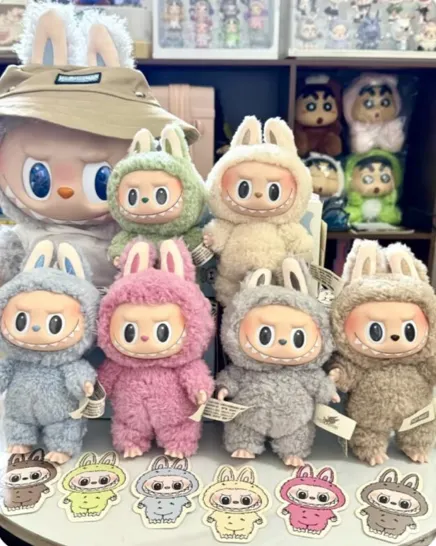
Image source: Xiaohongshu
In 2024, the sales of Labubu's Monsters series soared from 368 million yuan to 3.04 billion yuan, a surge of 726%, accounting for 23.3% of the total revenue of Pop Mart. The original price of 599 yuan for the co branded product was inflated to 14000 yuan, while the regular product box sold for over a thousand yuan.
Along with it came a wave of prosperity myths, with Bubble Mart's market value soaring to over HKD 330 billion, and founder Wang Ning directly taking over as the richest man in Henan with a net worth of HKD 146.7 billion.
He said, "The popularity of going to Thailand now is just like how Steve Jobs came to China back then."
Global panic buying storm
In fact, Bubble Mart launched Labubu as early as 2018, and no one expected that this lukewarm IP would successfully turn the tide in the global market through "stir fry cold rice" marketing.
On April 16, 2024, Lisa, a member of the South Korean girl group BLACKPINK, posted multiple photos with Labubu on Instagram. The "Heartbeat Macaron" inspired by Labubu was sold for 16000 Thai baht in Thailand.
Subsequently, Princess Ubon of Thailand held it in her arms, while Princess Sirivanna hung it on her Hermès bag, making Labubu a "luxury bag standard".
Young people declare on social media: 'I bought Hermès not for bags, but to find a decent home for Labubu.'
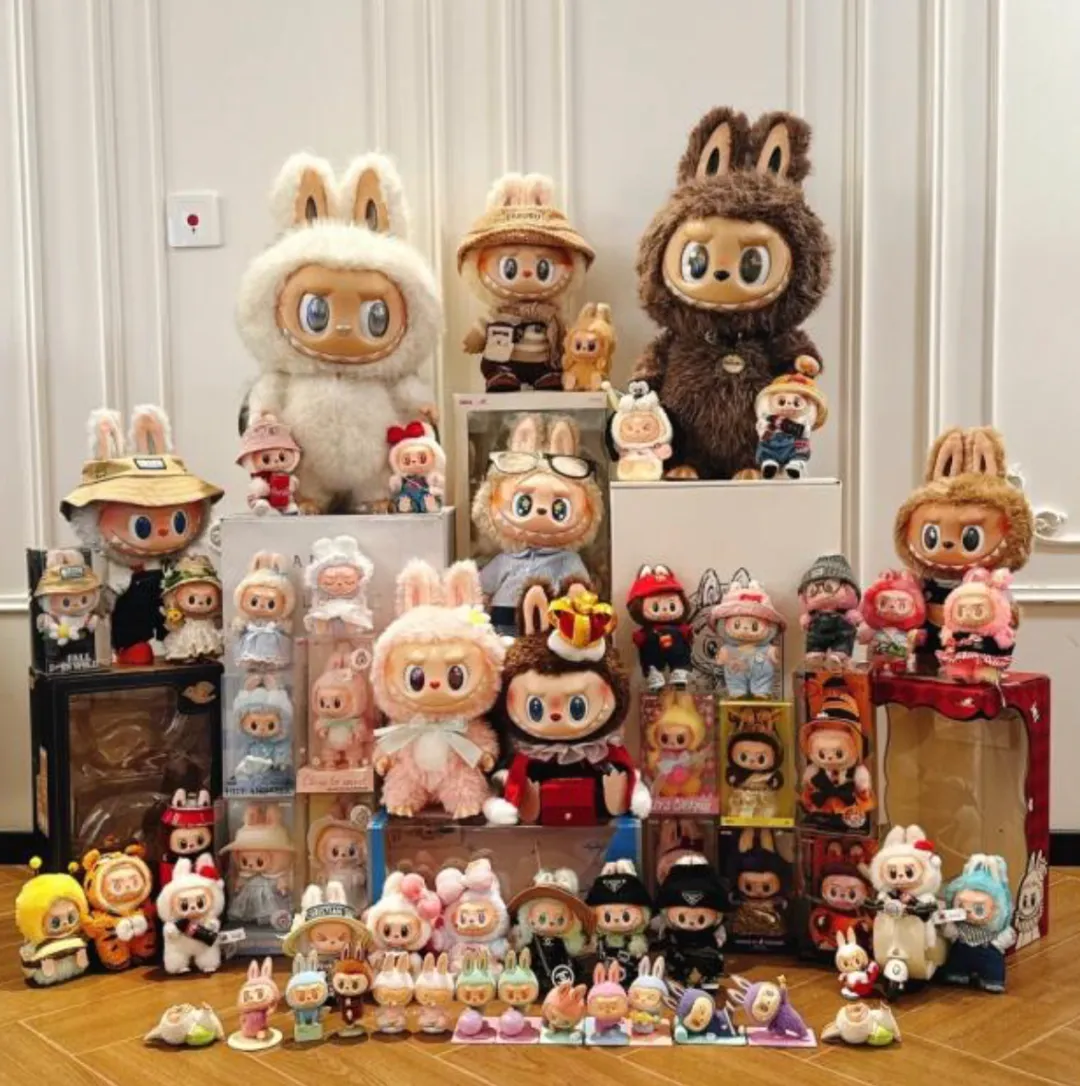
Image source: Xiaohongshu
With the fermentation of social media, Labubu quickly became a national level "female star" in Thailand.
On the streets of Bangkok, people of all ages and genders hang one or several Labubus on their bags, and some even tattoo them on their bodies. Thai monks not only recite scriptures, but also exchange and appreciate each other's Labubu.
On the first day of operation, the MEGA BANGNA store in Bangkok achieved a turnover of over 10 million RMB, and Thai scalpers even made a special trip to China to purchase goods.
There aren't many Chinese products either - Ping An Bank has launched a "Save 50000 yuan and get Labubu free" campaign in Xi'an, Hebei and other places to attract depositors. New customers who apply for a savings card and credit card can receive a joint payment blind box as a gift.
Now, Pop Mart has replicated this successful formula worldwide.
Clashes erupted in London stores due to Labubu flash sales, directly leading to Pop Mart announcing the suspension of its sales in the UK.
In Europe and America, the virus spread through the TikTok topic "Styling My Bag with Labubu", with over 5 billion views.
When a pop-up store opened in Barcelona, Spain, local passersby hummed "Labubu Song" to explain the reason for queuing to their peers - this brainwashing anthem has become an IP symbol that transcends language.
The third generation Labubu, which was released in April this year, has fallen into a global shortage crisis, with "difficult to find a child" becoming the norm. News of long queues has spread in various countries, and even "pirated" Labubu is selling wildly.
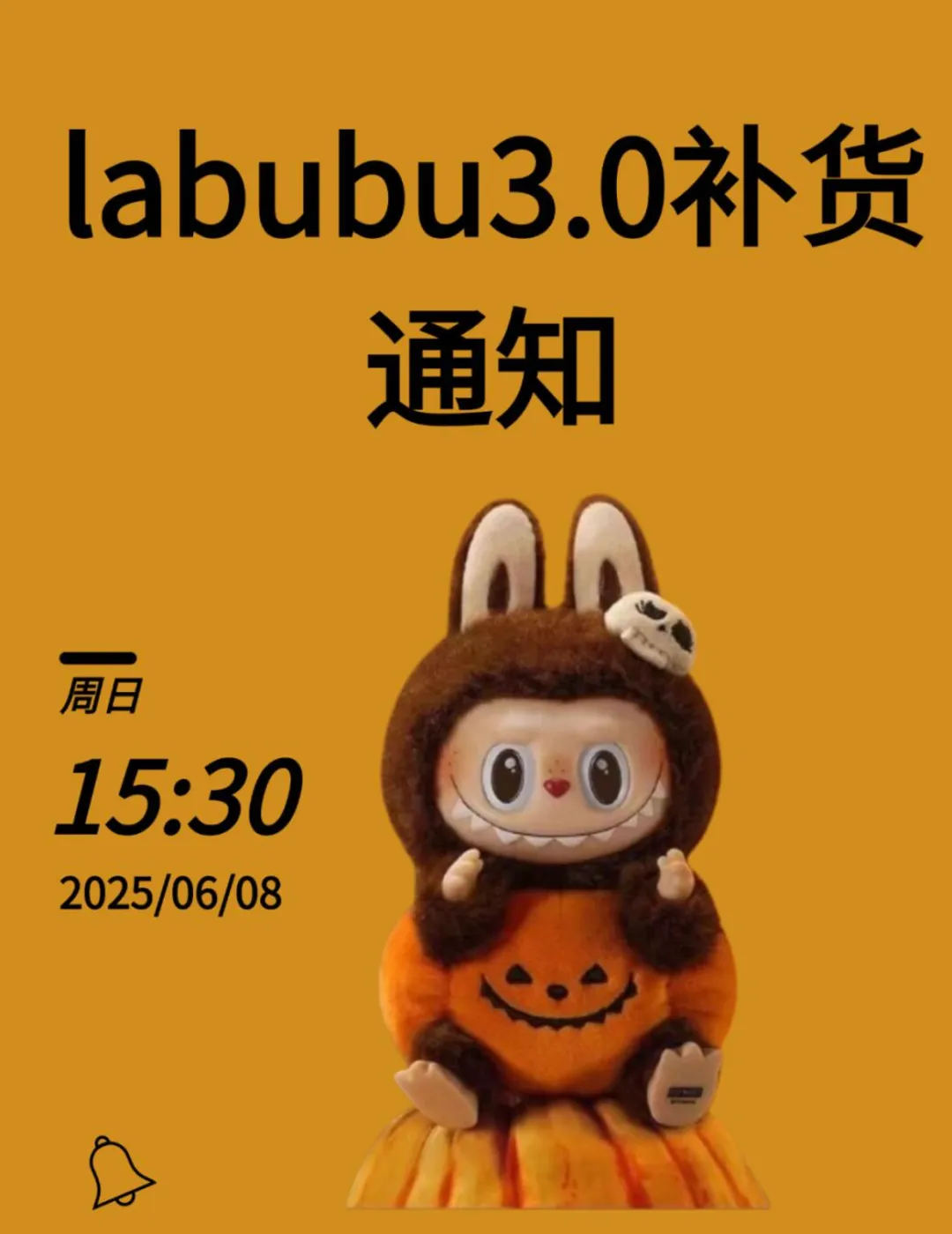
Image source: Xiaohongshu
The crazy premium in the secondary market reflects the scarcity of Labubu even more.
The original price of the regular blind box is 99 yuan, and it is commonly stir fried in idle fish for 200-600 yuan. The hidden version even exceeds thousands of yuan.
This frenzy even gave rise to cross-border industrial chains: professional scalpers use external software to monitor inventory, organize a "rush buying army" to monopolize 30% of store supply, and form a cross-border distribution chain. Thai fan groups come to China to sell goods, giving rise to the absurd phenomenon of "export to domestic sales".
Inventory crisis in global stores has become a norm.
The common language used by shop assistants has become 'Currently, the order volume is exploding, the store only has samples, and the replenishment time is uncertain'.
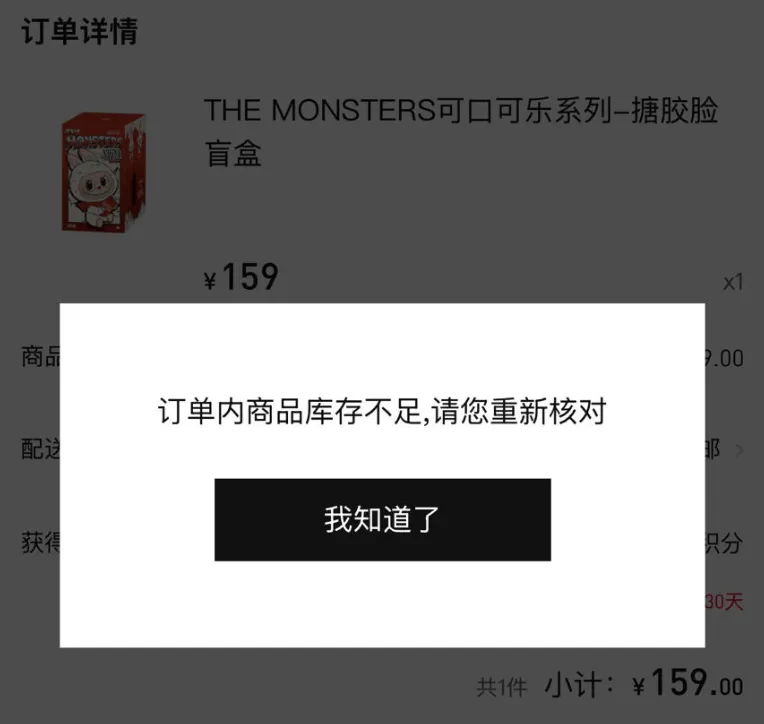
Image source: Xiaohongshu
The e-commerce live streaming room was filled with inquiries about "when Labubu will restock", and the customer service only mechanically replied, "Not at the moment, Baozi."
The current situation of factories behind the carnival
The business opportunity of trendy toys first spread to a small town in Dongguan city.
This small town is called Shipai Town and is the largest toy export base in China. Nearly a hundred trendy toy enterprises are densely distributed in the small town of over 40 square kilometers, with a total output value exceeding 10 billion yuan.
Before the Southeast Asian trendy toy market was ignited, the factory in this small town had been engaged in OEM business, with a scale of around 50 people and decreasing profits, like a frog in warm water.
However, when the beneficial wind blows, some bosses take advantage of the situation and soar, while others dare not even accept orders.
Ali self mocks himself as a 'spendthrift' 'second-generation factory', and the news of Labubu's popularity in the Thai market has activated the restless genes inherent in this second-generation's body: since outsourcing does not generate much profit, it is better to create their own original IP.
In 2024, he made a vinyl plush toy named "Nuomi Er", which is a cute and well behaved little girl.
The popularity of this toy even exceeded Ali's expectations.
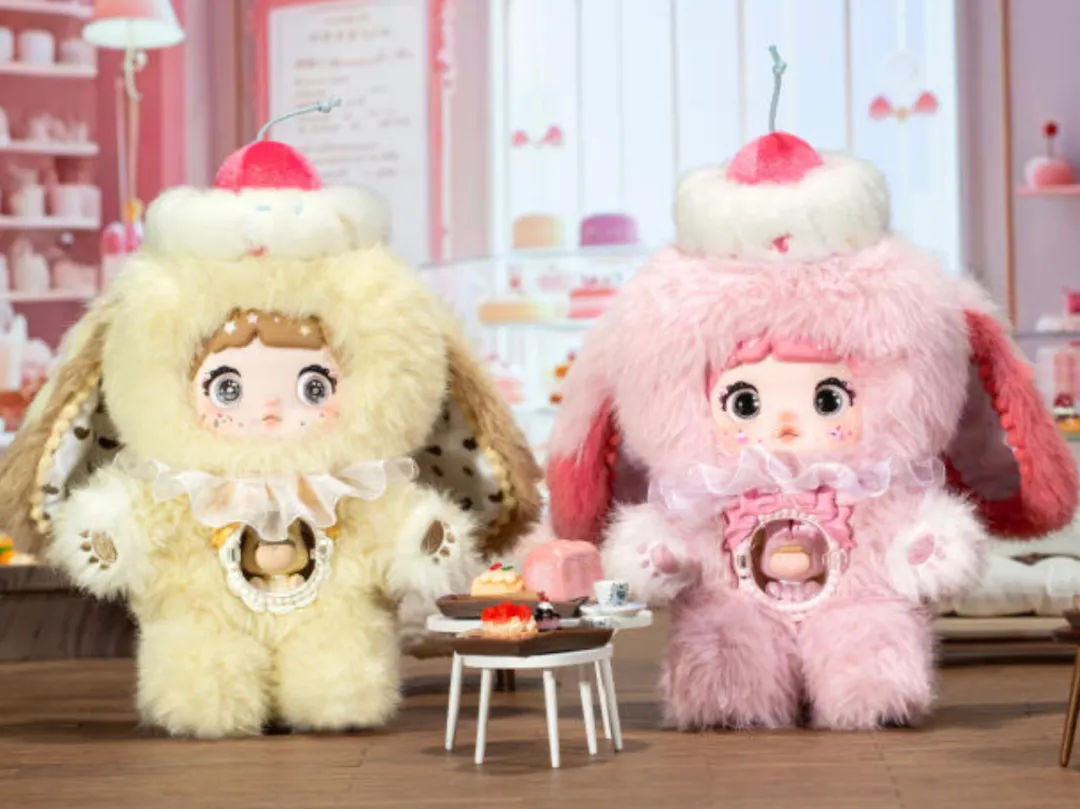
Image source: Xiaohongshu
Planned in February, launched in September, with the first batch of tens of thousands of units sold out on the first day at trendy toy stores.
The second batch of 300000 units sold out in less than a week.
The cooperating companies frequently "returned purchases" (i.e. placed new orders), with the largest order reaching 288000.
Now, two million units of this vinyl plush toy have been shipped, accounting for 90% of the sales in the Southeast Asian market.
In three months, Ali earned tens of millions, and he said, 'This is money that I couldn't earn even after 100 years of running a factory before.'
Why is it selling so well in Southeast Asia?
Ali believes that it is because the product is cute, and at least he spent time and effort polishing it to satisfy himself. He and his daughter both like it very much.
However, there are countless cute trendy IPs on the market, and attributing the reason for their popularity to "cuteness" is somewhat hasty.
So what exactly is the reason, Ali admits that he doesn't know either, it may be a mysticism.
Perhaps it is precisely because it is mysticism that there are very few bosses like Ali who have achieved great success. For more trendy small businesses, going global is still an adventure.
There is a factory in Shipai Town with a scale of 200 people. The boss clearly feels that the proportion of overseas orders is increasing, but due to a failed cooperation, the factory dare not take too big steps.
At that time, the customer proposed to make an electric trendy toy product, requesting a beautiful appearance and color. The boss was experienced and directly used seven colors.
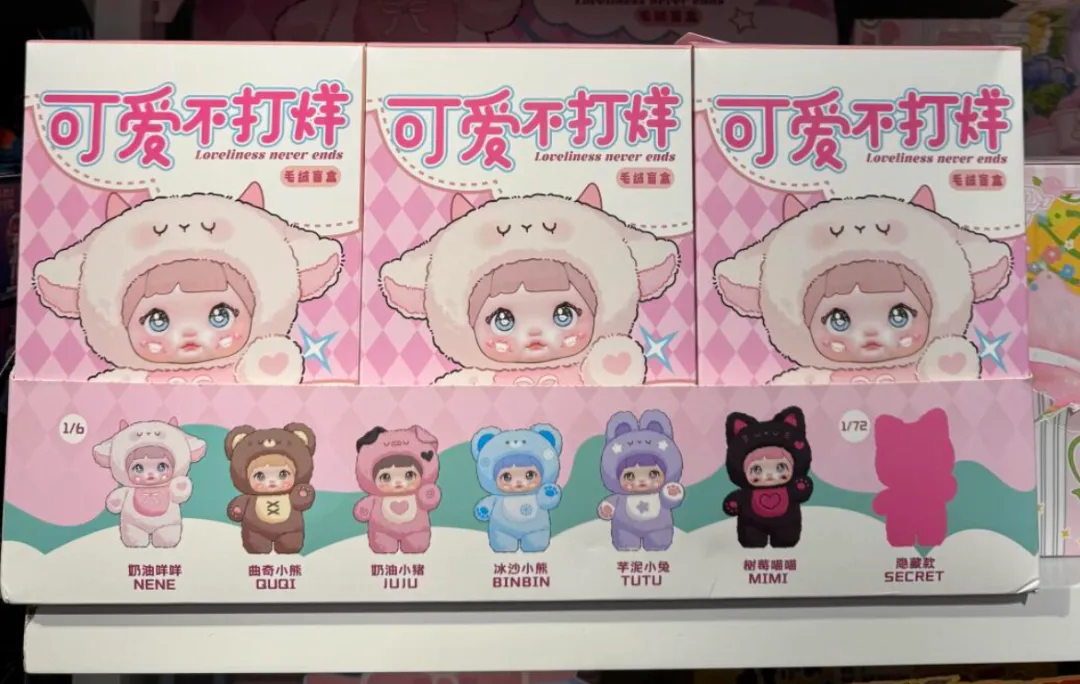
Image source: Xiaohongshu
But the downside lies in the wealth of experience.
This experience mostly originated from China, but overseas customers have a golden aesthetic, and it was just this misunderstanding that directly turned the order yellow.
This kind of misunderstanding caused by different cultures is not uncommon in overseas cooperation.
In addition to communication difficulties, there may also be discrepancies between expected payment times and actual payments, as well as difficulties in receiving payments. This requires consideration of exchange rates and a certain level of familiarity with international trade processes. Even orders from small countries may not receive payment.
This creates a very strange phenomenon: receiving overseas orders can actually make bosses scared, and the larger the order volume, the more scared they become because these orders have exceeded their comfort zone.
This situation is not uncommon. Small factory owners generally have a low level of education and do not understand how to go abroad. They are content with working behind closed doors and can only hire an English speaking employee to handle overseas orders. They do not have the ambition to explore and advance overseas, and naturally lack a sense of security for orders beyond their control, let alone difficult tasks such as creating original IP.
However, most factories do not take big steps like Ali, nor do they dare not accept orders like conservative bosses. Instead, they silently enter the bustling market of counterfeit OEM, which is known as the "Chinese version of Labubu".
Xiaoyu works at a toy factory in Zhongshan, Guangdong. Since last year, as Labubu became popular and out of stock in overseas markets, his company has received a large number of orders for customized "Chinese version Labubu blind boxes" from overseas. These blind boxes, which cost only a few yuan or more, can be sold for over $20 by shipping companies and are often in short supply.
For this reason, Xiaoyu described, "As soon as the product is produced on the production line, it starts making money."
This year, the trend of "selling as soon as there is stock" has spread to the domestic market.
At the beginning of the year, genuine Labubu products were out of supply in domestic stores, causing prices in the secondary market to soar several times. Sharp smelling merchants turned to the "Chinese version of Labubu" with sufficient supply.
The April rush of merchants reached its peak. At that time, after the release of the third generation Labubu and long queues of consumers in foreign Bubble Mart stores, Xiaoyu's factory had already begun to devote itself to making the third generation Labubu.
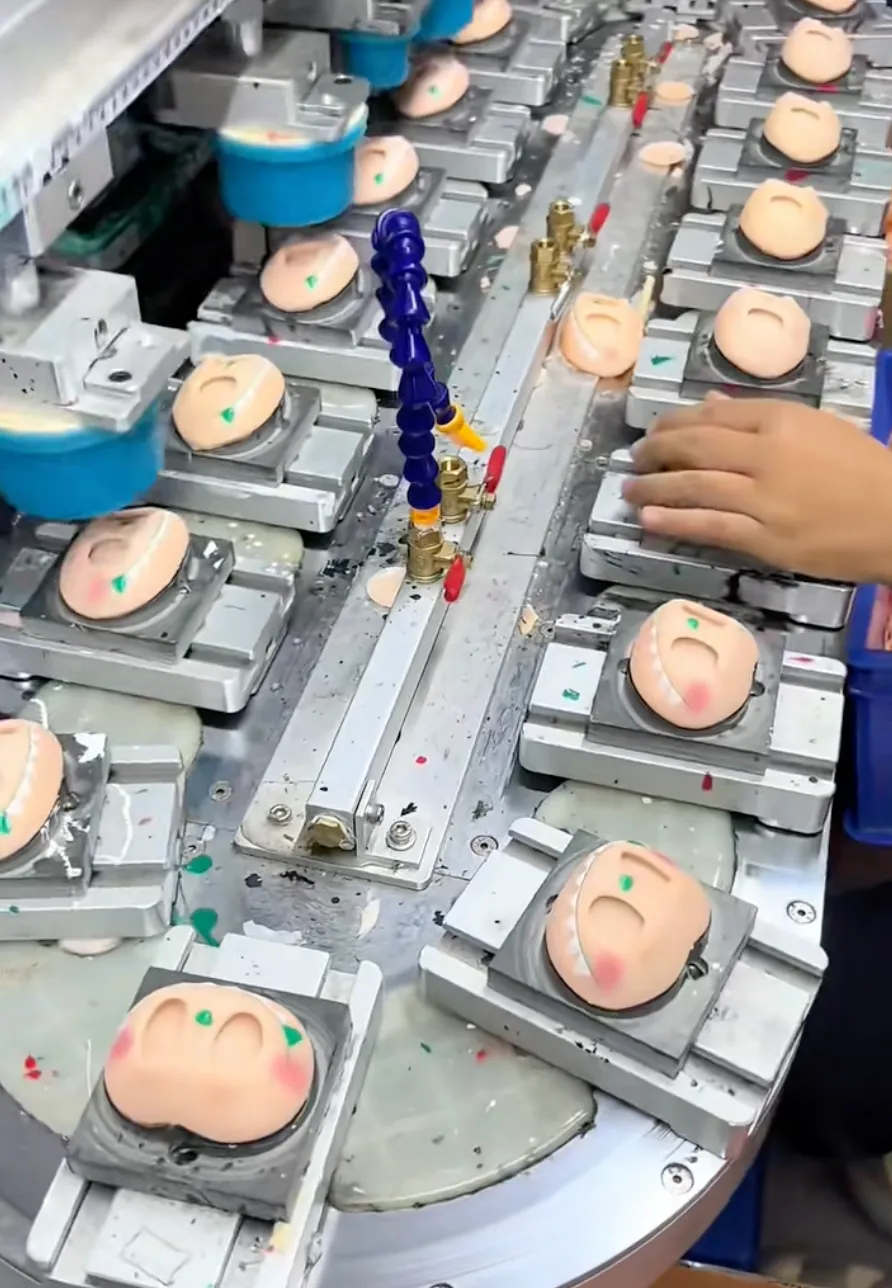
Image source: Xiaohongshu
Due to having stock in hand, Xiaoyu once entered a period of "mobile phone fear": "As soon as I open the communication software, everyone asks me if I have stock, and once there is stock, the other party will ask how much to add."
In recent days, the factory price of the blind boxes handled by Xiaoyu has skyrocketed to 13.5 yuan, and there is still a shortage of supply. In order to grab the goods, some customers even drive hundreds of miles to the production line to "squat".
The cracks beneath the radiance
With the expansion of production capacity, the quality control crisis of Bubble Mart is gradually emerging.
Consumers roast about the quality of toys: rickets in the neck, crooked hands and feet, exposed threads and other problems frequently occur.
A fan helplessly joked, 'Genuine products are not as good as fake ones, it's like the avatar has been twisted.'
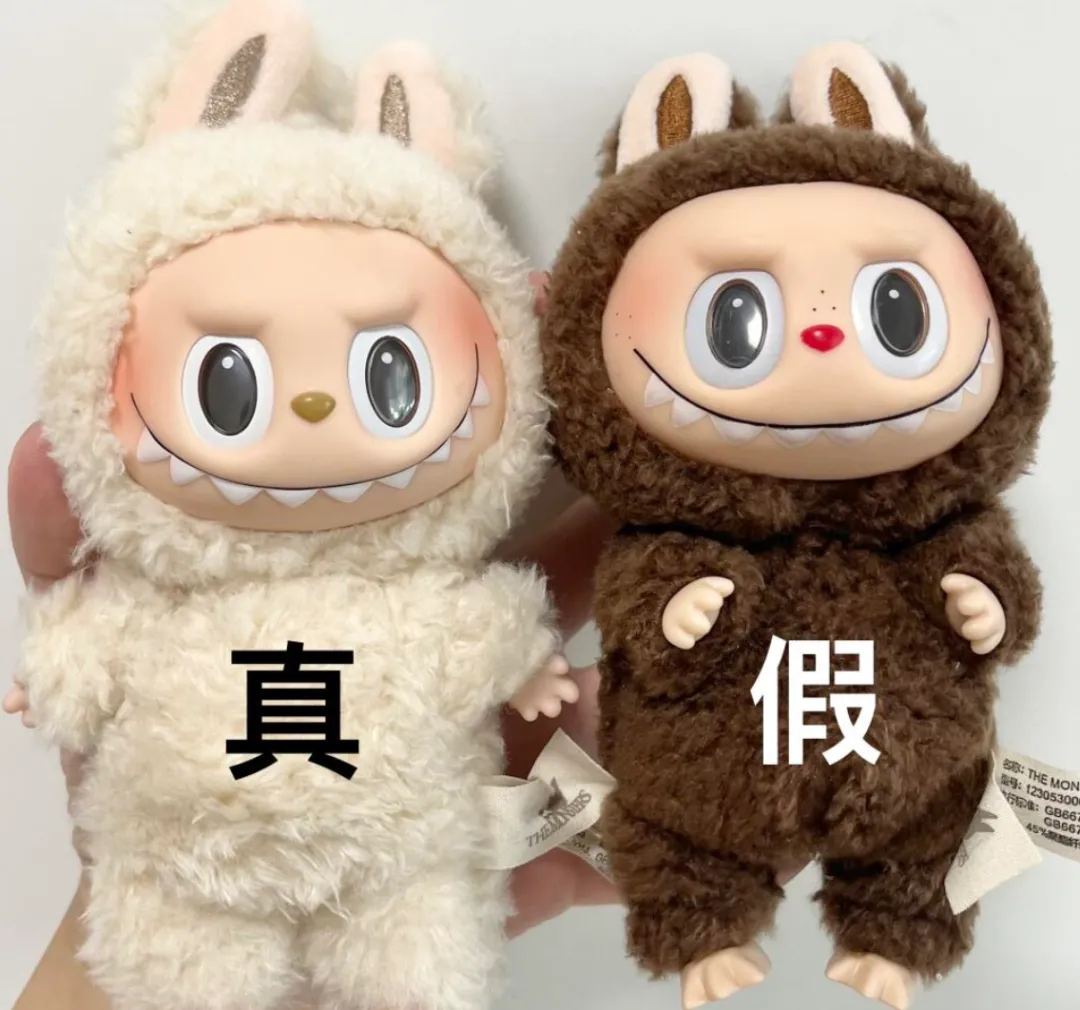
Image source: Xiaohongshu
The quality issue is still secondary, and Labubu's high dependence on IP storytelling is the first development dilemma that Bubble Mart urgently needs to solve - how to achieve long-term operation of IP.
As a modern industrial product, trendy toys are valued for their rarity. Although this is a common market rule, the core competitiveness of industrial assembly lines lies precisely in their ability to produce on a large scale.
This characteristic puts Pop Mart in a dilemma: deliberately running out of stock will encourage scalpers to speculate and maintain product popularity in the short term; Although mass stocking can quickly increase sales, it will seriously impact secondary market prices and damage the long-term value of IP.
The ideal IP market should ensure that consumers can purchase products at the original price or reasonable premium in the secondary market.
Once the market is oversupplied for a long time and the secondary market prices continue to be lower than the official pricing, even blind boxes that were once considered scarce will quickly lose public attention and disappear into ordinary blind boxes.
Nowadays, the focus of Bubble Mart has shifted from short-term profits to long-term IP operations. Therefore, it intends to control the price of Labubu in the secondary market through hunger marketing and scalping speculation. Therefore, it can be seen that Bubble Mart also tacitly approves of the existence of scalpers to a certain extent, "said Xiaoyu.
It must be admitted that the activity of scalpers has indeed maintained Labubu's market popularity for a certain period of time. But in the long run, the harm of long-term hunger marketing to IP cannot be underestimated.
The core consumer group of trendy games is ordinary players. If a large number of consumers cannot buy their desired products for a long time, the popularity of IP will be short-lived and quickly fade away.
After all, only a few people are willing to pay for high premiums. Once a large number of ordinary players leave, Labubu will eventually become a "self interested" product of the niche circle.
Image source: Xiaohongshu
What's even more tricky is that the scalper economy and hunger marketing have given rise to another dilemma - rampant plagiarism and counterfeit goods.
In the market environment where Labubu genuine blind boxes are extremely out of stock, many scalpers and merchants take risks and produce the Chinese version of Labubu.
Due to the relatively low price of genuine Labubu products, the price difference between counterfeit and genuine products is extremely small. Some consumers are even willing to pay a premium for counterfeit products due to their popularity. The mentality of "buying fake products without burden" has gradually spread, leading to a surge in sales of Labubu counterfeit products.
Merchants are seizing business opportunities and engaging in various "secondary creations" around Labubu's image, further disrupting market order.
Faced with this chaos, Pao Pao Ma Te's road to rights protection is full of hardships.
On the one hand, obtaining evidence is extremely difficult. Nowadays, counterfeit craftsmanship is becoming increasingly sophisticated, and the counterfeiting industry chain involves multiple links such as production and sales. Accurately tracing the source is like finding a needle in a haystack; On the other hand, the cost of safeguarding rights remains high, and Labubu, as the world's top IP with extensive influence, needs to deal with different judicial systems when fighting against counterfeits across borders, which undoubtedly further raises the threshold for safeguarding rights.
It can be seen that even though Labubu has become a hot super IP nowadays, the challenges faced by Bubble Mart are still severe. If there is a lack of effective follow-up operations, Labubu is at risk of being abandoned by the market at any time.
The IP lifecycle is cursed.
The Japanese trendy gaming market once shrank by 23% due to blind box dependence. Although Pop Mart has over 150 IPs, Labubu and Molly together contribute nearly 40% of revenue, and the problem of head dependence is still unsolved. Don't forget, the lesson learned from the Space Molly co branded model's price drop from 10000 yuan to 1000 yuan is still there.

_1751507038923.png)