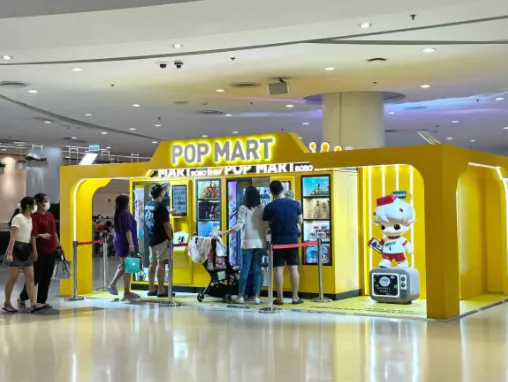











In April this year, shortly after former U.S. President Donald Trump announced over 100% tariffs on Chinese goods, some curious visitors stopped by his Trump Tower store on Fifth Avenue. They discovered that many product labels obscured their place of origin, and all those items were, coincidentally, “Made in China.”
A similar story once played out in the UAE.
In 1999, Hao Feng, then General Manager of Ji Base (Hong Kong) Company, arrived in the ancient Arabian land of the United Arab Emirates. While browsing a local shop, he casually asked about the origin of a home appliance. The shopkeeper replied nonchalantly: “These are from Korea, Malaysia, and Indonesia.” After an entire day of shopping, not a single product labeled “Made in China” could be found.
Suspicious, Hao purchased several items, took them back, and scratched off the covering labels—only to uncover the truth: the products were all made in China. The “Korean” label was a façade.
Confronted with this, the shopkeeper sheepishly admitted: “Middle Eastern consumers don’t trust Chinese goods. To sell them, we have to disguise the origin.”
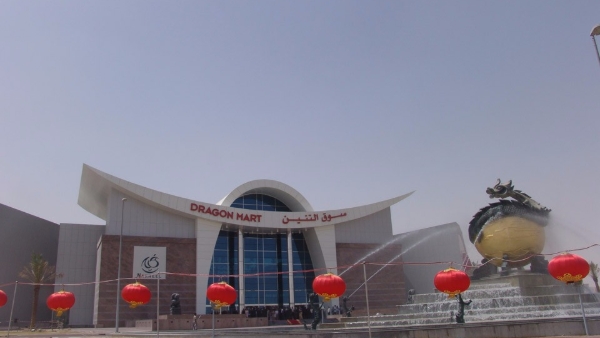
Ironically, this misjudgment would become the seed of Dragon Mart, a marketplace that, two decades later, would become so successful that its competitive Chinese products would be censored with stickers—this time, by a U.S. president.
_1747214598822.jpg)
The interior of Dragon Mart in Dubai today
A Pivotal Exhibition Sparks a New Beginning
The birth of Dragon Mart began with a promising opportunity.
In 1999, the Sharjah government sought to co-organize a trade exhibition center with China. Upon learning this from the Chinese consulate in Sharjah, Hao Feng immediately reported it to the Ministry of Foreign Trade and Economic Cooperation (now the Ministry of Commerce), receiving swift support.
Back then, economic ties between China and the UAE were minimal, making Hao’s mission to prepare and investigate the opportunity particularly challenging.
After uncovering the "label cover-up" incident, Hao had mixed feelings. On one hand, he was relieved that Chinese products weren’t being rejected for quality reasons but due to misperceptions. On the other hand, he knew rebuilding consumer trust in “Made in China” would take time.
All the more reason, he thought, to create a formal trade platform.
In April 2000, the first China Electrical and Mechanical Products Exhibition opened in Sharjah. Major Chinese brands like Haier and Little Swan joined in. The sheer size and diversity of products astonished local attendees.
“Many overseas Chinese in the UAE wept with emotion,” Hao recalled. “Arab visitors were wide-eyed with surprise—amazed by the range of Chinese products on display.”
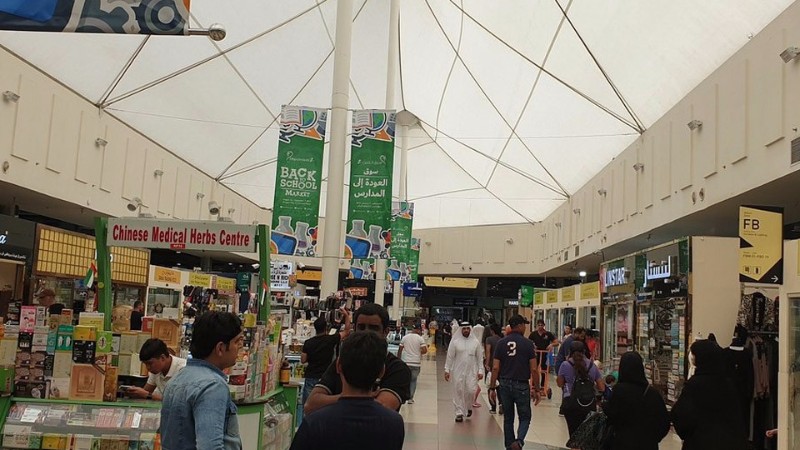
Buyers from all over the world
A Warehouse No One Wanted
The exhibition's success paved the way for Dragon Mart’s creation, but its origins were humble.
In 2002, during a ministerial visit to the Middle East, the Dubai government offered China a 150,000-square-meter warehouse in Jebel Ali Free Zone, rent-free for three years. The offer aimed to strengthen trade ties and give Chinese companies a launchpad into the Gulf region.
Hao Feng was assigned to assess the opportunity. However, expert evaluations concluded that if used solely for storage and logistics, the facility would incur an annual loss of at least RMB 20 million.
Sleepless on his return flight to Hong Kong, Hao reimagined the plan: instead of storage, what if the warehouse served as a direct sales and display platform for Chinese businesses to connect with local buyers?
The idea of Dragon Mart was born.
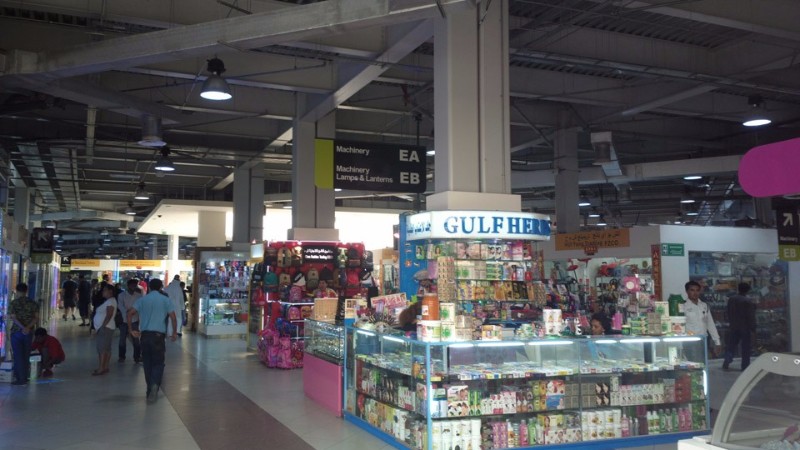
Shops in Dragon Mart in Dubai
He traveled to Quanzhou, Fujian, to research and gauge interest. Around 300 small and medium-sized enterprises (SMEs) expressed willingness to join, but filling 150,000 square meters required 3,000 companies.
Then fate intervened. Hao discovered that the hotel he stayed in was hosting a national market restructuring conference. After some effort, he obtained a document listing companies from various sectors across China.
To his surprise, the demand far exceeded expectations. The original space would not suffice.
Hao revised the plan: 150,000 square meters for trade and exhibition, 30,000 for warehousing, and 160,000 for auxiliary facilities such as factories and dormitories, totaling 340,000 square meters.
None of the city’s existing sites were large enough. Eventually, Hao set his sights on a desert area 15 kilometers south of Dubai City—Dragon Mart found its home.
With support from the Chinese Embassy’s Commercial Office and the Chinese Consulate in Dubai, Hao led more than 3,000 Chinese enterprises on an ambitious journey westward. Dragon Mart, powered by the spirit of Chinese entrepreneurship, took root in Dubai’s sands.
The Wealth-Building Power of Dragon Mart
From the moment it emerged in Dubai’s southern desert, Dragon Mart has been viewed as a modern-day gold mine.
Hao Feng vividly remembers December 7, 2004, when Dragon Mart officially opened. Media from around the world flocked to witness the event. There was excitement, curiosity, and skepticism.
“Data tells the story,” said Hao. “Before Dragon Mart’s opening, China-UAE trade was around USD 1 billion. Within a year, it soared to USD 5 billion. By 2006, it had surpassed USD 10 billion.”
The massive marketplace became a gateway between Chinese goods and the Middle East. Though its exact share of bilateral trade is hard to quantify, Dragon Mart’s platform and spillover effects are undeniable.
Dubai, often called “the Hong Kong of the Middle East,” serves as a regional logistics and trade hub. Whether it’s industrial equipment or home décor, Chinese goods, rich in variety and value, flow through Dragon Mart, spreading across the Middle East and North Africa via modern Silk Road routes.
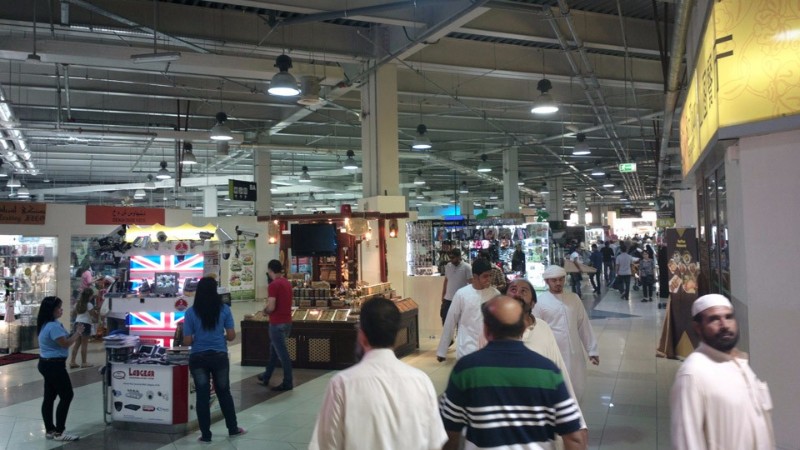
British goods area in Dragon Mart in Dubai
“With favorable policies and tax incentives, many Chinese entrepreneurs became multimillionaires,” Hao explained.
Before Dragon Mart, Chinese businesses couldn’t wholly own foreign enterprises in the UAE and had to pay hefty deposits to local sponsors. Dragon Mart changed that, offering safer, more independent pathways to market.
Since its launch in 2004, Dragon Mart has attracted over 2,000 Chinese enterprises and tens of thousands of products. Daily footfall exceeds 10,000 people, reaching up to tens of thousands on weekends. It has become the largest Chinese goods trading hub in the Middle East, with annual trade reaching tens of billions of U.S. dollars.
The world marveled at this desert miracle.
Epilogue: A Market Transformed
Over the past 20 years, Dragon Mart has undergone a significant transformation.
A booth that once cost only RMB 70,000 now commands a transfer fee of RMB 1.5 million.
Smaller stores are consolidating into larger operations. While the number of businesses may be decreasing, quality is on the rise.
“Chinese products have gained recognition, but Chinese brands still lag. That’s our next goal,” said Hao.
The success of Dragon Mart illuminated the road ahead for “Made in China.” Like a blooming flower in the desert, it turned the dream of wealth into reality. As camel caravans meet cargo ships, and ancient Silk Road shadows merge with digital freight under the Persian moonlight, we witness not only the embrace of Eastern ingenuity and Gulf prosperity but also the brilliant glow of Chinese manufacturing, forged in the fires of globalization.

_1751507038923.png)